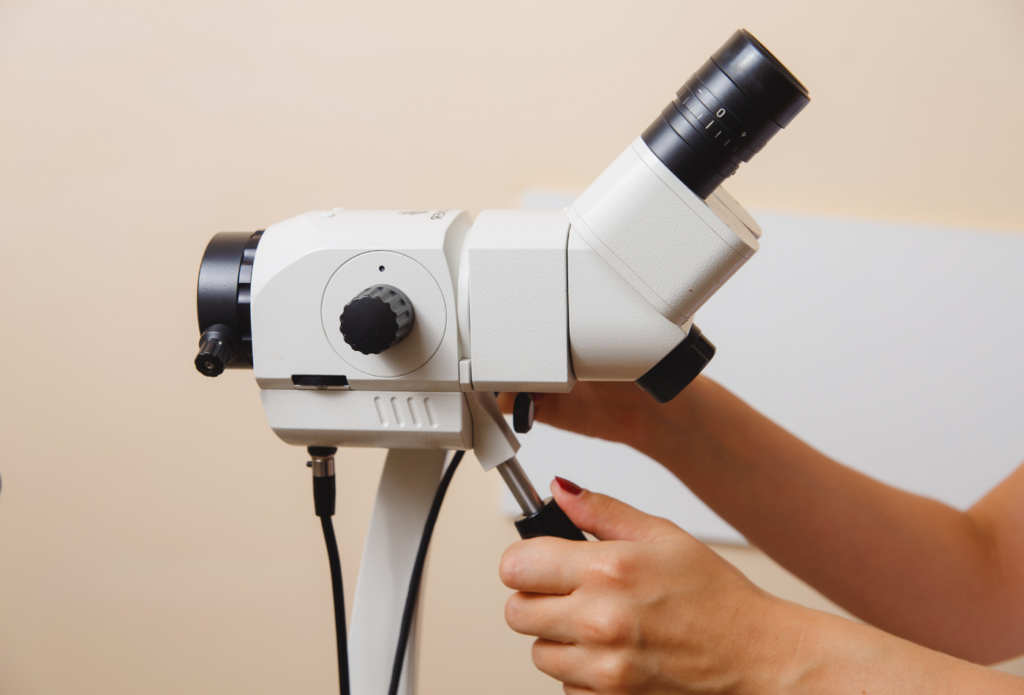



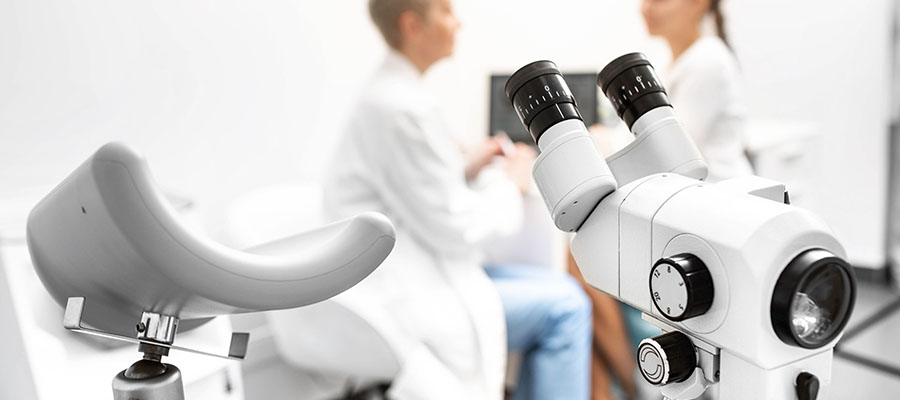

We prioritise women's health by providing advanced diagnostic procedures such as colposcopy. This procedure is vital for detecting and addressing potential issues early, ensuring the best possible outcomes for our patients.
A colposcopy is a diagnostic examination aimed at closely inspecting the cervix, vagina, and vulva for indications of disease. It utilises a colposcope — a specialised device featuring a light and magnifying lens — to offer a clear and enlarged view of the tissues. It is usually advised when abnormalities are detected during a routine pelvic exam or Pap smear.
During a colposcopy, you will lie on an examination table, similar to a pap smear. A mild acetic acid solution (vinegar) is applied to the cervix, which helps highlight any abnormal areas by turning them white.
We examine the cervix through the colposcope and may take a biopsy from any areas that appear unusual. The entire procedure usually takes about 10–20 minutes.
A colposcopy is typically recommended if you have had abnormal results from a pap smear or if there are visible abnormalities during a pelvic exam. Common reasons include:
This procedure helps in the early detection of cervical cancer, precancerous changes, and other conditions, enabling timely and appropriate treatment.
If no abnormal areas are detected, your healthcare provider will discuss a plan for regular follow-up screenings. If a biopsy is taken, the tissue sample will be sent to a laboratory. Results may indicate:
We understand that undergoing medical procedures can be daunting, and we strive to offer a compassionate and supportive environment for all our patients.
Reach out to us today to schedule your colposcopy and take the first step towards maintaining your cervical health.
Email: info@networkonehealth.co.za
Phone: (011) 028 2805
Locations:
Busamed Modderfontein Private Hospital, Johannesburg
Louis Pasteur Private Hospital, Pretoria